
Smoke detectors make use of the ionizing properties of alpha particles to function. They contain an ionization chamber which consists of a positive and negative electrode, with a small amount of the radioisotope Americium-241. Normally, the alpha particles from the radioisotope collide with the oxygen and nitrogen molecules in the air, causing them to ionize. To ionize means to knock off electron/electrons from an atom. Thus, as a result of the ionization of particles, a small current is generated which is detected by the electrical circuit in the smoke detector. However, when smoke enters the ionization chamber, the alpha particles collide with the smoke particles instead of the air particles. This causes a decrease in the current which triggers the alarm.
Alpha radiation (α) is a positively charged helium nucleus emitted by a larger unstable nucleus. It is a relatively massive particle, but can be blocked by a sheet of paper or human skin. However, alpha radiation can be dangerous if it enters the body by ingestion or inhalation. Large exposures can result in very damaging biological responses due to the ability of alpha particles to directly break covalent bonds. Some commercially sold items, including smoke detectors, contain a small amount of radioisotopes. It is sometimes argued that radiation from those radioisotopes posa a public health concern. This research aims to determine the mean free path of the alpha particles emitted from smoke detectors to evaluate the risks on human health related to its use.
Alpha radiation is usually observed in elements heavier than Thallium. Energy of emitted alpha particles can be calculated from the mean free path in air at 15° C and 1 atm. The mean free path is the average distance that a particle travels in an environment before it loses energy. The mean free path generally decreases with the increase of the atomic mass of the elements the particle is traveling through.
For alpha particles in air, the mean free path can be related to energy with Geiger’s relationship:
R = 0.318 * E3/2
Where R is the distance in cm and E is the energy of the alpha particle in MeV
The particle detector, PS-2116, is used to collect radiation intensity versus distance from the core of a smoke detector. The data collected from the are plotted in figure 1. The experimental data can be modled with a function in the form of y=(a+b*xC)-1. We can see the approximate result (approximation function of the number of impulses as a function of the distance from the radioactive source).
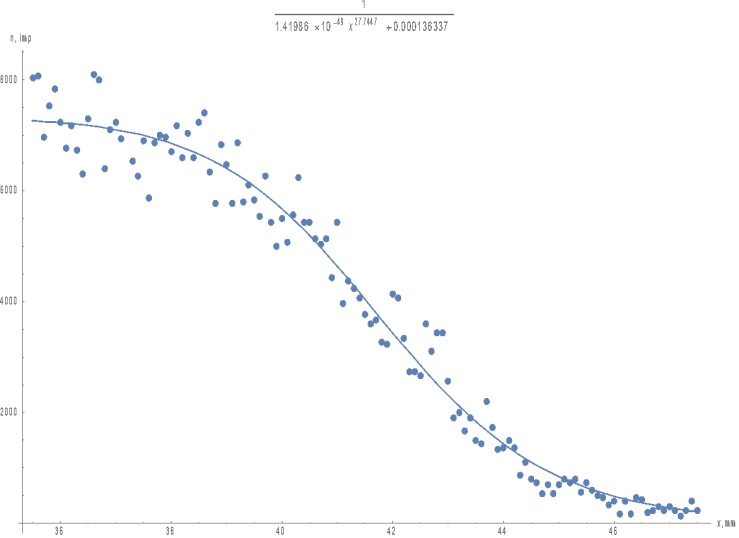
Fig.1- Experimental data and the approximate function
To find the mean free path, we differentiate (find the slope of) the approximation function and locate its minimum(figure 2).
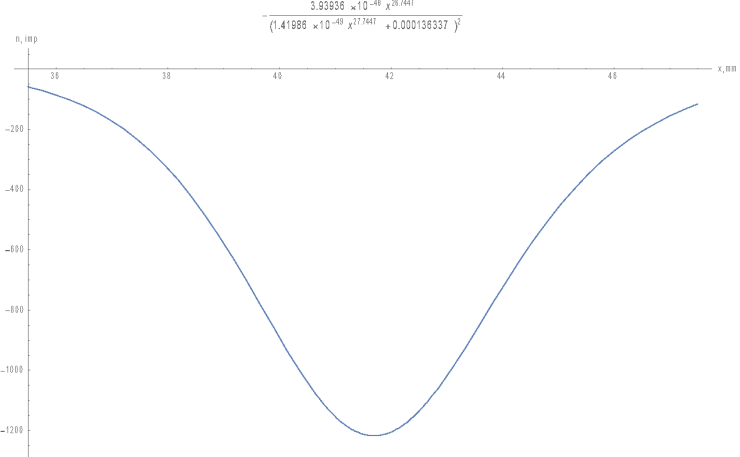
Fig.2-The derivative of the approximate function
According to figure 2, the minimum corresponds with=41.7 mm. Using Geiger’s relationship, we found out that the average Energy for alpha particles is 5.56 (MeV)
In conclusion, alpha radiation from smoke detectors doesn’t appear to affect human health as the action radius (mean free path) is less than 5 cm. On the other hand, the risk of dying in a home fire is cut in half in homes with working smoke alarms.
Bibliography
Chauhan, Vinita. “Effects of α-Particle Radiation on MicroRNA Responses in Human Cell-Lines.” The Open Biochemistry Journal, vol. 6, no. 1, 2012, pp. 16–22., doi:10.2174/1874091×01206010016.
Măsurarea parcursului particulelor α şi determinarea energiei Eα [Measurement of particle trajectory α and determination of energy Eα].
http://atom.ubbcluj.ro/katalin/Laborok/Alfa.pdf.
Weston, Luke. “Health Physics Implications of the Ionisation Smoke Detector.” Physical Insights, Physical Insights, 23 Oct. 2008, enochthered.wordpress.com/2008/10/23/health-physics-implications-of-the-ionisation-smoke-detector/amp/?fbclid=IwAR1neZf111N3BvGnw0F3IbRKdN7aNiTB48jaAzApK2F7ScxRyebX16JWepI.