
When the earth was young and life has just started to develop, the only source of energy was from simple hydrocarbons, carbohydrates, and other organic compounds. The problem with only having access to these compounds as an energy source is that the complexity organisms are limited due to the availability of these compounds and the little amount of energy store in their bonds. However, as evolution has taught us, life finds a way. It didn’t take “long” (about 800 millions years) before some organisms learned to power themselves with the most abundant energy source on earth – sunlight. By harnessing the power of photons from the sunlight, these organisms are able to turn very simple molecules, CO2 and H2O to be exact, into glucose, which contains a great deal of energy in its carbon-carbon bonds. This process is called photosynthesis and it changed life on earth forever.
Photosynthesis happens in two parts: there’s the light dependent reaction, and the light independent reaction(also called the Calvin cycle). In the light dependent reaction, special protein complexes containing pigments called photosystems that are located on the thylakoid membranes of chloroplast absorbs light to break down water into excited electrons, H+ ions, and oxygen. This is called photoactivation of the photosystem and the photolysis of water. The high-energy electrons then pass through a series of protein called the electron transport chain(ETC). These proteins uses the energy from the electrons to pump H+ ions into the thylakoid space, forming a concentration gradient. The electrons are then re-energized by a second photosystem and is used to reduce NADP+, an electron carrier, to NADPH. The H+ concentration gradient generated is also used to conduce chemiosmosis, where the ions are diffused back to the stroma through an enzyme called ATP synthase. When H+ ions passes through ATP synthase, ATP is produced. This is called non-cyclic photophosphorylation, denoting that the energy for the phosphorylation is supplied by light(photo-)[diagram 1].
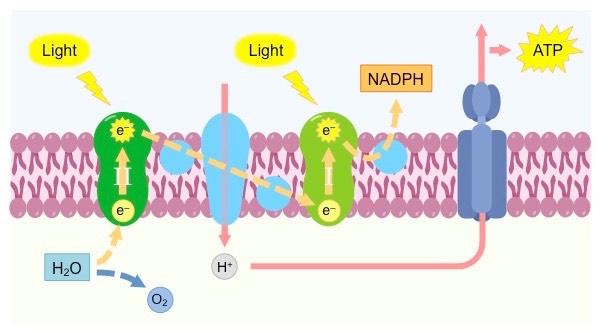
Diagram 1: Non-Cyclic Photophosphorylation (Source: BioNinja)
(The name non-cyclic photophosphorylation implies that there is a cyclic version of it. And indeed there is. Cyclic photophosphorylation is another type of photophosphorylation that happens when there is excess light. When there is a large amount of light hitting the photosystems, all the NADP+ available becomes used up and non-cyclic photophosphorylation can not proceed. Instead, photolysis of water is halted and the excited electron are cycled between the ETC, which uses the energy of the electron to create a H+ concentration gradient, and a photosystem, which re-energizes the electron [diagram2].)
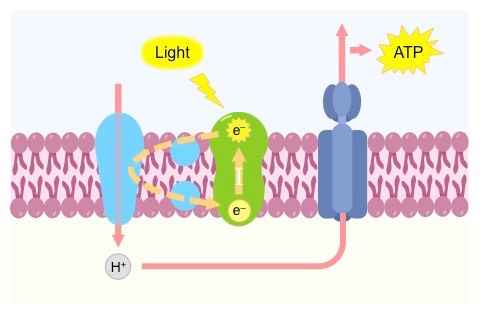
Diagram 2: Cyclic Photophosphorylation (Source: BioNinja)
The ATP and NADPH produced in the light dependent reaction is then passed onto the light independent reaction, also called the Calvin cycle(named after Melvin Calvin, the guy who discovered it). The Calvin cycle starts with 6 RuBP(Ribulose bisphosphate), a 4 carbon molecule, then, 6 CO2 molecules reacts with these RuBP to form 6 unstable 6-carbon molecules with the help of an enzyme called Rubisco(RuBP Carboxylase). This is called carbon dioxide fixation. Then, the unstable 6 carbon molecules break into 12 3 carbon molecules called 3-PGA. Next, the 3-PGA reacts with ATP and NADPH in phosphorylation and redox reactions to form 12 triose phosphate(3-carbon sugar with a phosphate group attached) G3P. 10 of these triose phosphates are phosphorylation to regenerates the initial 6 RuBP and complete the cycle while the 2 other triose phosphate go on and form one molecule of glucose [diagram 3].
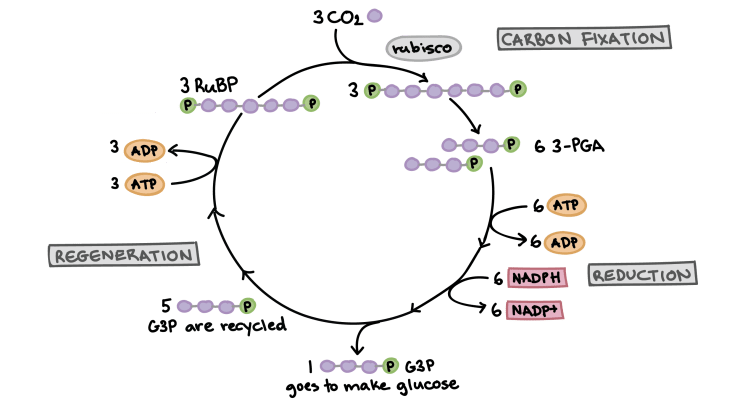
Diagram 3: The Calvin Cycle (Source: Khan Academy)
In conclusion, photosynthesis uses light to turn water and carbon dioxide to sugar. This process is the backbone of all ecosystems and without it, complex life on Earth will be impossible to sustain.
This is part one of the two part series: The Biochemical Circle of Life. Part 2 can be found here.
Bibliography
Coniel, Oscar. “Photosynthesis.” IB Biology Notes, ibguides.com/biology/notes/photosynthesis-hl.
“Cyclic vs. Non-Cyclic Electron Flow.” Organic Molecules Diagrams, mandevillehigh.stpsb.org/teachersites/laura_decker/photosystem_notes.htm.
“The Light-Dependent Reactions.” Khan Academy, Khan Academy, http://www.khanacademy.org/science/biology/photosynthesis-in-plants/the-light-dependent-reactions-of-photosynthesis/a/light-dependent-reactions.